
Balanced or Unbalanced ..

Arlequen

Vinyl Addict
Joined
Dec 28, 2008
Messages
244
Reaction score
0
Location
Brescia (Italy)
Hello guys,

After have listened the Whest Audio 30RDT for the first days with a normal unbalanced ic cables .. yesterday I got the decision to remove the RCA of my Mogami Neglex 2534 and add Neutrik XLR connectors.
Well .. early on I preferred the previous RCA but than hour by hour is getting better .. probably due to break in of connectors (solderings too) and output XLR path in the phono stage .. never used before.
It seems I got more silence .. even if this 30RDT is silent like a fish also by RCA output.
The soudstage is a bit less wide but I got more deep .. more pinpoint presentation and more refiniment of the notes
Anyone already tried balanced output of a Whest phono stage?
And what's your result?
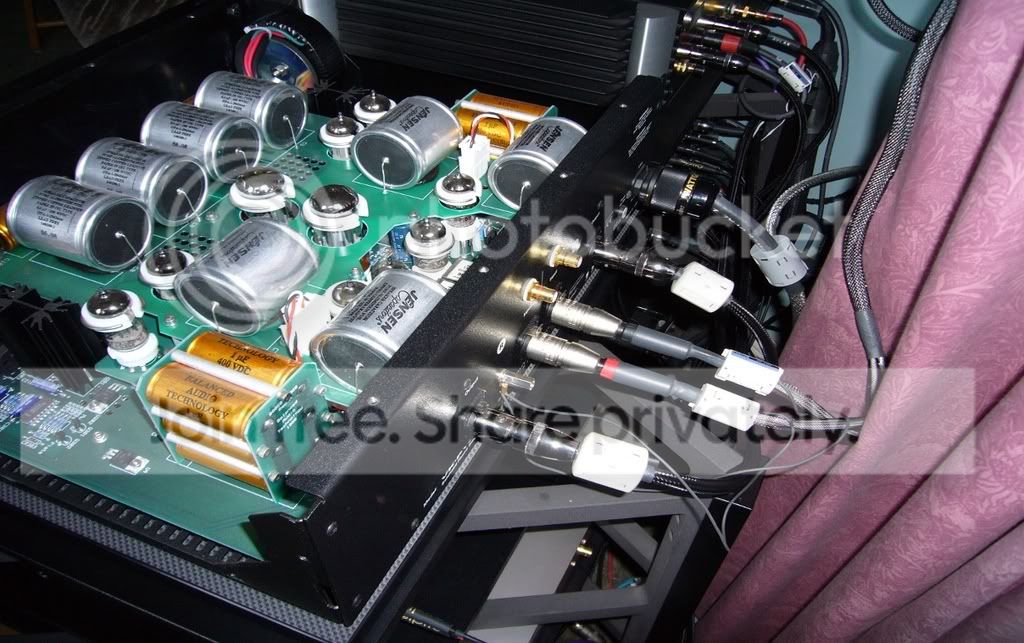
 
Balanced Phono connections option YES OR NO

Arlequen

early on I preferred the previous RCA but than hour by hour is getting better .. probably due to break in of connectors (solderings too) and output XLR path in the phono stage .. never used before.
It seems I got more silence .. even if this 30RDT is silent like a fish also by RCA output.
The soudstage is a bit less wide but I got more deep .. more pinpoint presentation and more refiniment of the notes
Anyone already tried balanced output of a Whest phono stage?
And what's your result?

Hi Arlequen

I can't speak about the Whest but I do have experience of the BAT VK10Se which allows balanced input and balanced output. It also has rca in and out. With this phono stage balanced in and out sounds vastly better than the rca option, so YES I hook up balanced. I use Neutrik adapters to do this (This is a small compromise, but and while I should get it wired with XLR's . I have other phono stages which don't have balanced inputs, so at this time I am keeping it RCA). As a phono cartridge is a balanced design(stereo ones), it makes sense to do this as does the superior noise rejection(always an issue with the delicate signals found in vinyl replay) inherent in balanced design and XLR use.

Most of my system is balanced and I usually prefer the sound when any item is hooked up this way. If it is a true balanced design(I.E true dual differential circuit layout. Each channel has the same dual mono layout. So each channel Left/Right has its own separate circuit board. This doubling up makes these designs dearer, but IMO makes for better sound, if you connect it up to take advantage of the design, at least this is what I have found when I have done this,IMHE) ins and outs,it will sound better this way and show a marked improvement over the RCA inputs. If you have other kit that is balanced you should try hooking it up this way.

BAT VK 10SE Balanced Valve Phono Stage

holidayandhifipictures218.jpg


Regards D Louth 77
 
Last edited by a moderator:
Hi

I think it's more about circuit topology than having bal/unbal ins and outs. I still use a LAMM LL2 which has no option for balanced out. The audio from this preamp is way better than the vast majority of pre-amps out there with balanced outputs...so it must be down to circuit design. Also at such short cable lengths, will there really be any benefits. I can see why the LAMM and CJ ART and many other high-end preamps and phonostages do not have the option. Interestingly many pro-audio products adopt the impedance balanced method. The AKG 414 and many other mics and mixers use this type of balancing and it's NOT differential! It doesn't need to be, as the most important factor in balanced circuits is the fact the both pins 2 & 3 need to be of the same impedance for the reciever to work.
Whest Audio with their pro design background have adopted this method of balancing.

BUT saying all of that, if it sounds better for you then go for it.
 
Providing the ALL the circuits balanced connected are true differential in configuration, then the benefits WILL be there

Most audio electronics are single-ended in design with a balancing chip (£2 thing you can buy in RS) stuck on the end.

But what benefits, if your using 1m of cable.
I can see the benefit if you are using 50m cable runs or have lots of noisy lighting and generators around.
 
Have to say that I recently switched to connecting using balanced, and really do feel that it was a good step up. Infact I believe in it so much, that I think I'd avoid non-balanced kit now.
 
Rob,


The benefits, are lower noise floor, great insight and more presence (At volume level matched)
Yes even at .5m
I feel your statement 'Most audio electronics are single-ended in design with a balancing chip stuck on the end' does not sum up a lot of quality equipment.
While I will agree a few manufacturers choose this 'cobbled' method, most 'quality brands do not'
Besides a carefully deisgned and implimented fully discrete balanced input stage does not use 'chips or god forbid op-amps' lol!
Given the choice I would take a properly balanced system over a singled end one.
That is not to say the singled end version is bad in any way, just not as complete to our ears.
I suspect strongly YMMV
 
I hope my Pass Labs X1 and my Parasound Halos JC1s are truly balanced units .. at least this is what it's written on their manuals
 
I hope my Pass Labs X1 and my Parasound Halos JC1s are truly balanced units .. at least this is what it's written on their manuals

The Pass X1 probably is.

The JC1 is not, as the - speaker output terminal is at
ground potential. Mind, I don't think Parasound claim
that it is a fully balanced design.
 
Rob,


The benefits, are lower noise floor, great insight and more presence (At volume level matched)
Yes even at .5m
I feel your statement 'Most audio electronics are single-ended in design with a balancing chip stuck on the end' does not sum up a lot of quality equipment.
While I will agree a few manufacturers choose this 'cobbled' method, most 'quality brands do not'
Besides a carefully deisgned and implimented fully discrete balanced input stage does not use 'chips or god forbid op-amps' lol!
Given the choice I would take a properly balanced system over a singled end one.
That is not to say the singled end version is bad in any way, just not as complete to our ears.
I suspect strongly YMMV

interesting that belles do not have balanced connections.
 
my cyrus dacX was a true balanced design, and when used with a bel canto pre3 and ref1000s (also balanced) it sounded much much better via its balanced connections than single ended.

Once again, its all about how the component is designed to work. if its circuitry is balanced from the start, then using single ended is the compromise.

I found tangible benefits in clarity, smoothness, and bass weight using the balanced connections.

Sadly my upcoming accuphase amp has balanced connections, but the amp itself is not truly balanced, so its unlikely i'll end up using them at any point.
 
What happens when single ended design like my LAMM outperforms a fully symetrical design like the PASS lab design? Which is does. I don't think that having balanced is the 'must have' but good design is better. There aren't many truly symetrical differential designs out there so i wouldn't worry about it shrink. What your Accuphase does is what MOST products do with balanced ins and outs. All of the Audio Aero CD players use the same balancing chip as a lot of manufacturers.
A truly balanced/differential design front to back is hard to implement, 4 volume pots etc, one for each leg, unless you go single ended somewhere, which is why most designs are differential input (opamp style) designs.
 
you must add .....

in your opinion

its seems your opinion is at variance to most other posters, including my experience of the effect.

good single ended will be better than poor balanced ....but a mediocre balanced is usually better than a good single ended ...imo for the reasons already stated.

this of course takes no account of the cables used ...these can play a vital role in the end sound.
 
Rob,

A Lamm owner, sir well its a tough cross to bare, however I am sure you do it with pride :-)
I also notice all of the manufacturers you quote are great hifi sounding components too Rob. I like the cut of your gib sir.
 
My Classe amps sound far better balanced, even if using single ended sources.


Not necessarily saying this case, but in some cases (originating I suspect from studio/pa application) many manufacturers have a greater output on the balanced.. to drive the (expected) lengths of cables..

IME of audio comparisons it's usually favourable to prefer the louder one :)

Not disregarding benefits of balanced (e.g. lower noise floor etc) but level matching is a point worth considering in comparisons
 
Not necessarily saying this case, but in some cases (originating I suspect from studio/pa application) many manufacturers have a greater output on the balanced.. to drive the (expected) lengths of cables..

IME of audio comparisons it's usually favourable to prefer the louder one :)

Not disregarding benefits of balanced (e.g. lower noise floor etc) but level matching is a point worth considering in comparisons

In my case regarding Classe, the benefits are more than volume related, but it is the lower noise floor which does it for me, Classe are not the most silent of amps, you can tell they are on when your head is next to a speaker, and via XLR this is reduced (Even with an RCA to XLR lead from a non balanced amp).

Level matching is a good point, but most with some experienc with audio will know whwn something is "only" louder and adjust as necessary, I even do this with CD's. In particular when going from an old CD to a new release.
 

Latest posts

Back
Top