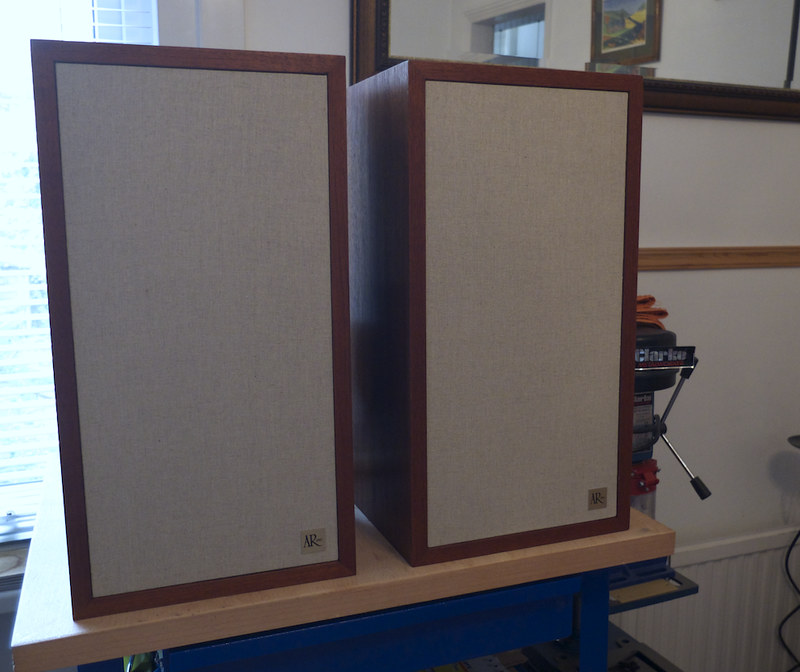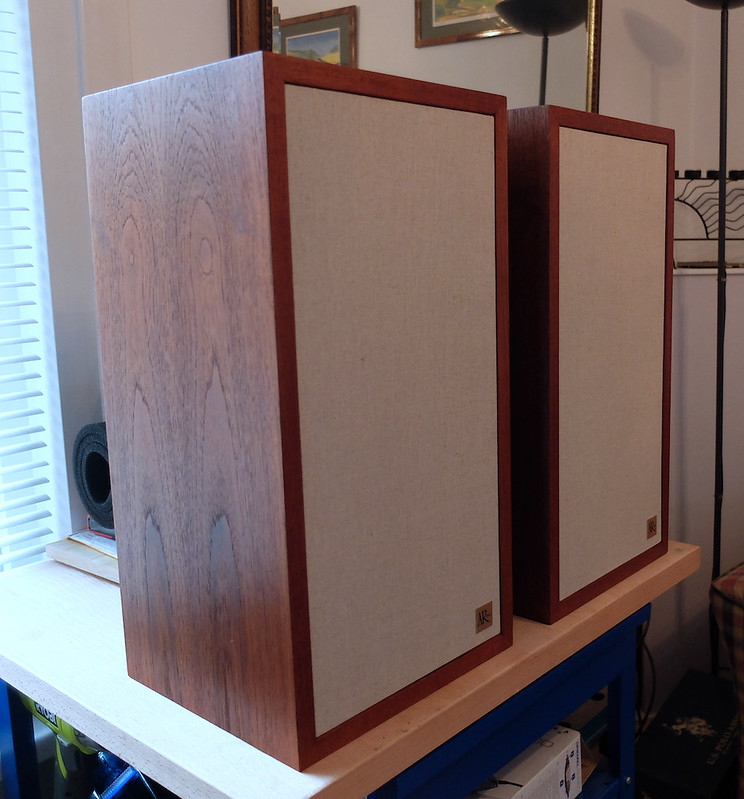

RobHolt
Moderator
- Joined
- Oct 23, 2004
- Messages
- 4,126
- Reaction score
- 12
I like Acoustic Research loudspeakers. The acoustic suspension woofer loading, the very simple crossovers, the bespoke in-house built and designed drivers, the Villchur and Allison design expertise, the classic look.
I also like the idea that all AR models are designed for close to wall use, and while this isn't always ideal in every way, it does lend a degree of consistency across the range.
The sometimes crude looking paper drivers perform very well and require the minimum of external filtering, and while that's not something I see as essential from an ideological perspective, it always feels 'right'
The late 60s and early 70s were the best days for AR and many of the designs improved on the early work.
There is often some confusion over the acoustic suspension (AS) principle and it's often mistakenly confused with Infinite Baffle (IB).
AS requires very low compliance in the woofer spider and surround, relying on the restoring force or air-spring effect of the air contained within a sealed box.
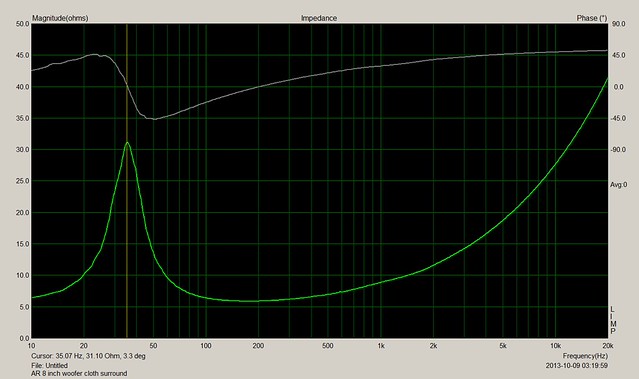
With IB you are still relying on the spider and surround providing the dominant restoring force. Suitable drivers for AS loading will typically have Fs (free air) resonance below 30hz and be capable of good excursion. Back when the original AR loudspeakers were introduced, drivers required huge cabinets for decent LF extension and the distortion performance was very poor due to nonlinearities introduced by the driver suspensions. Ed Villchur's idea was to eliminate the effect of such suspensions, reducing distortion and allowing reasonable bass extension from relatively small boxes, though these are still far larger than what's considered small today!
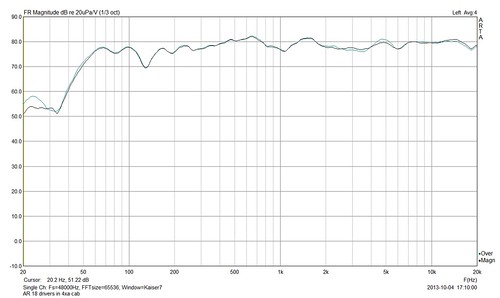
The 4xa is a rework of the earlier 4 and 4x with the main difference being the choice of tweeter. Each successive version shrank the paper cone/dome giving better top end extension and dispersion. Crossover frequency is quite low at 1.8khz but entirely sensible when crossing to an 8" woofer. Again, the correct engineering choice and the larger than usual tweeters have no problem crossing this low.
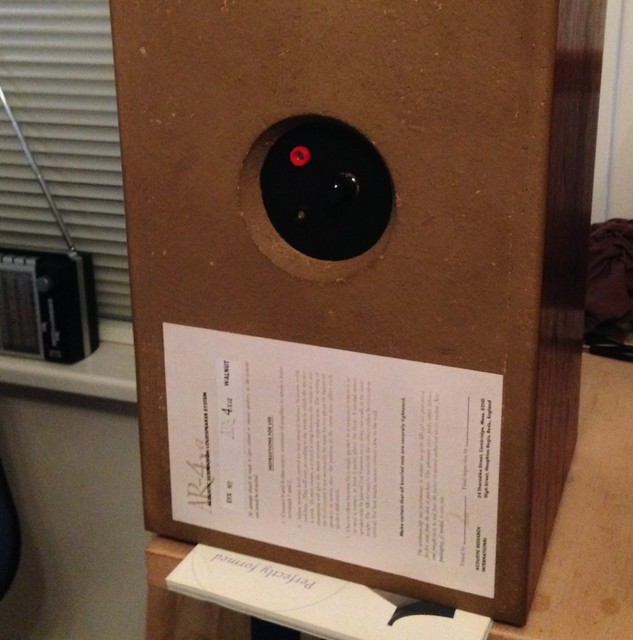
This particular pair of ARs were bought two years ago in a charity auction for £20 and have been sitting unloved since awaiting my attention. The bass drivers work but the coated cloth surrounds have detached from the woofer chassis in places and the tweeters didn't work. The cabinets were strong and intact. Quite scratched and with the usual corner dents. But hey, these are 40 years old.
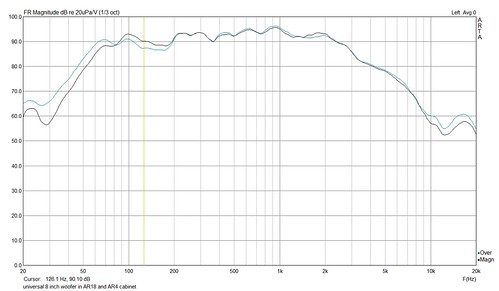
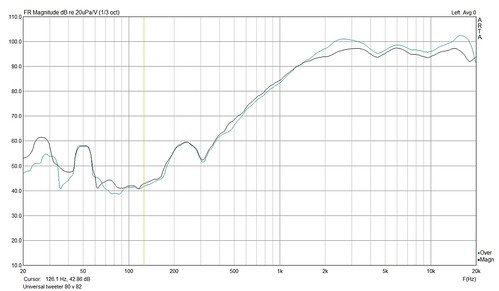
Rather than repair these drivers I decided to use a newer set dating from 1979 which I'd culled from another similar AR model. These look and work perfectly following fresh foam on the woofers, and they share design very closely with the older drivers with the tweeter in particular being essentially the same thing but with a larger magnet assembly.
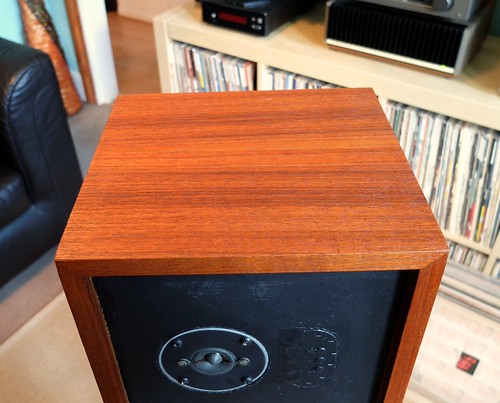
Here are the drivers:
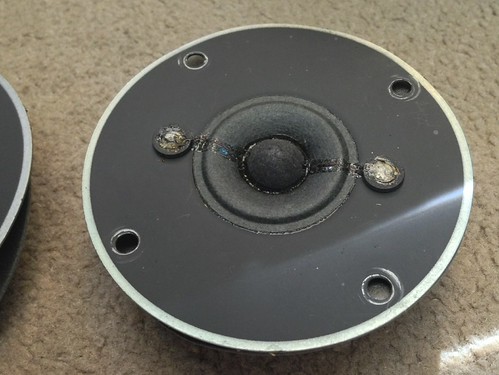
IMG_0617
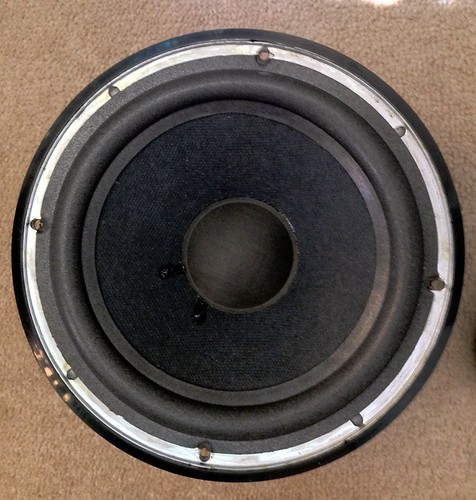
IMG_0615
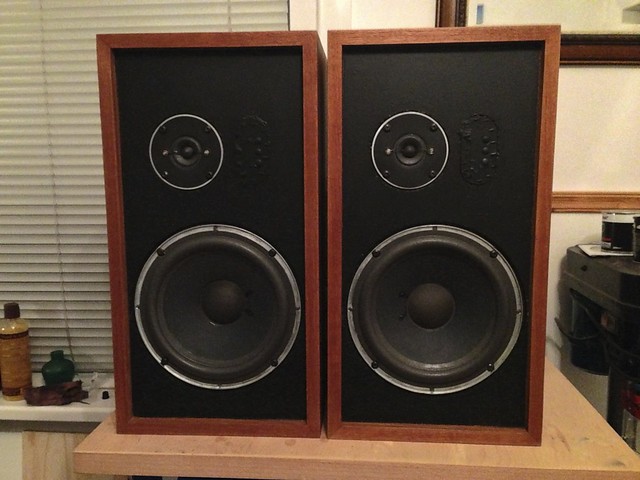
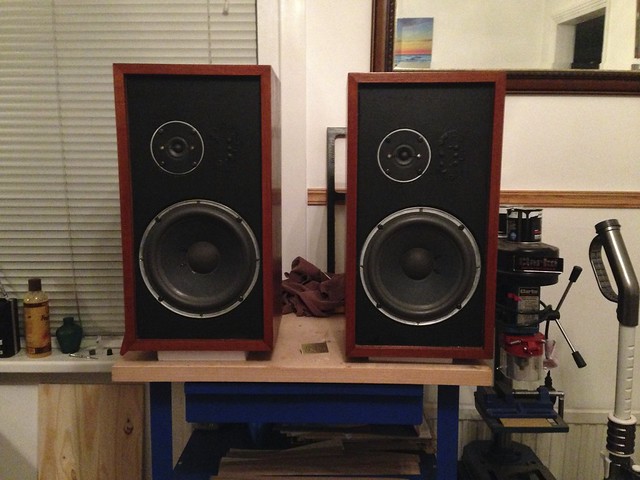
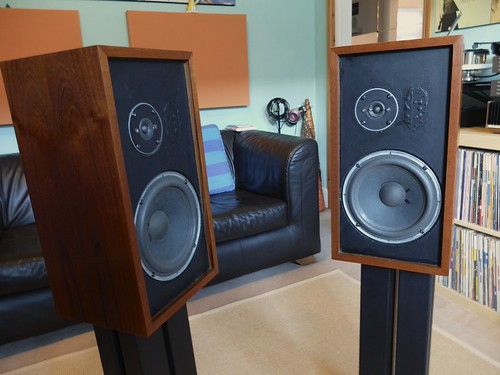
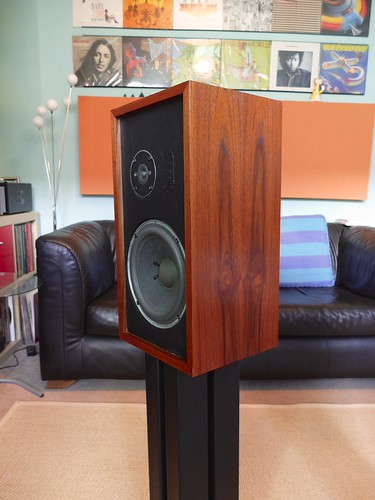
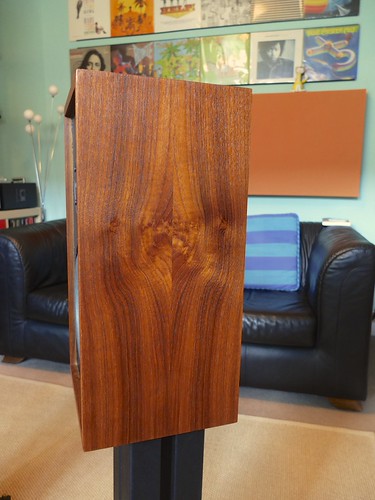
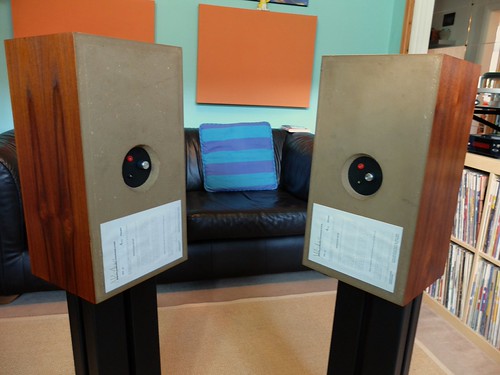
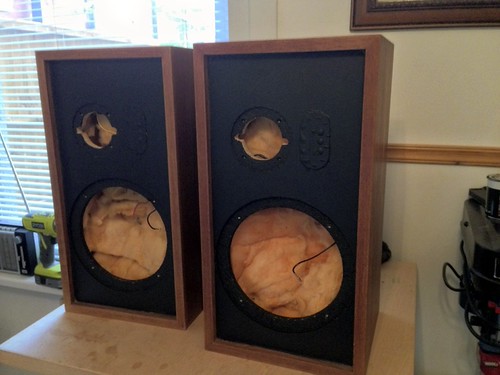
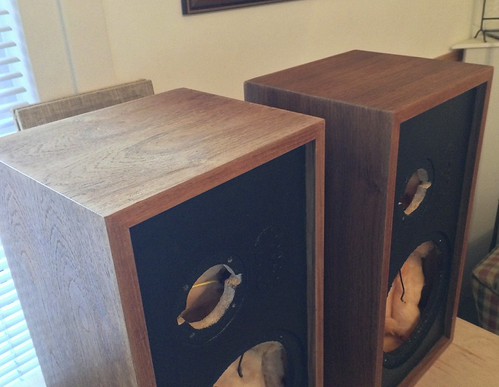
Cabinets after sanding back to the bare veneer and baffles repainted:
(yes thats a lot of fibreglass in there - probably illegal today but it's great for a sealed box - makes you bloody itchy though!)
IMG_0602
IMG_0606
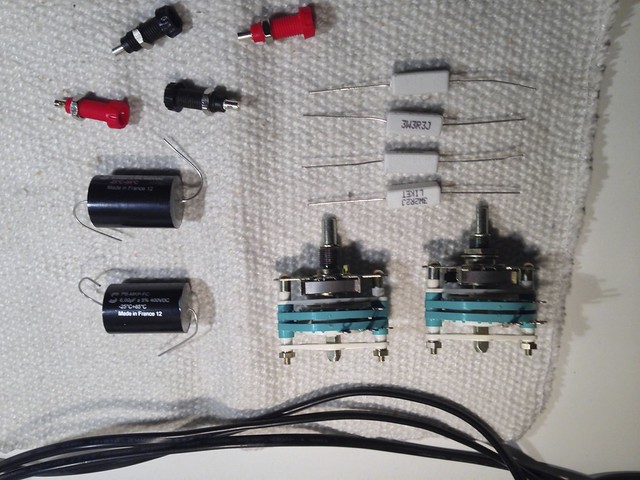
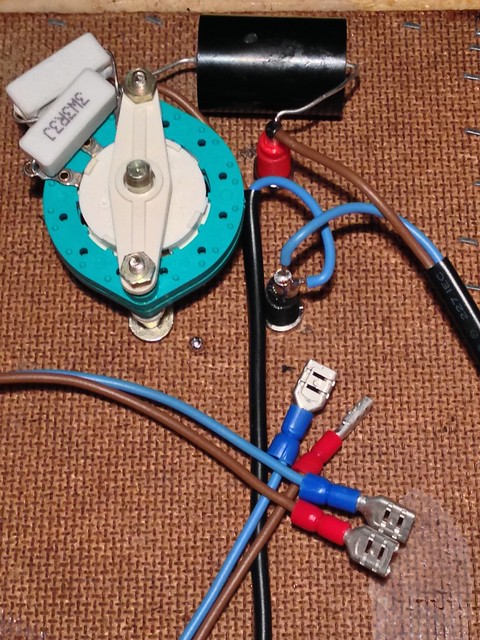
Next job will be fitting a new HF level control and wiring + the crossover cap.
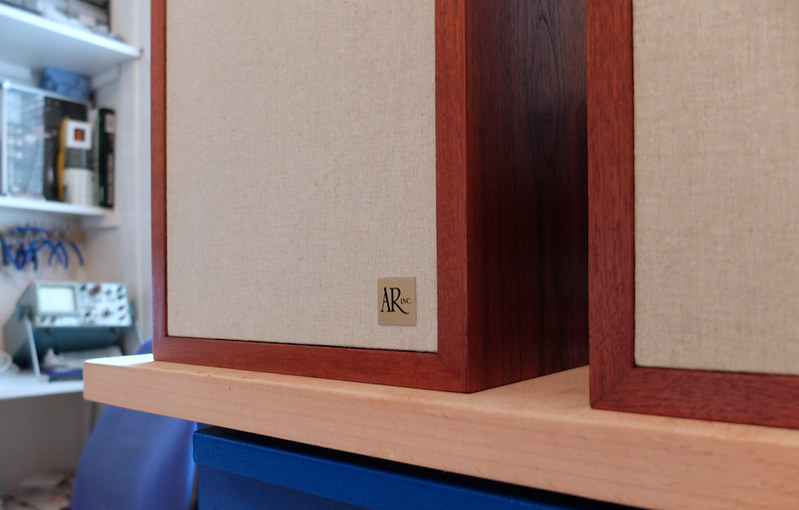
Then some new grille cloth, brass badges and finally oiling the cabinets.
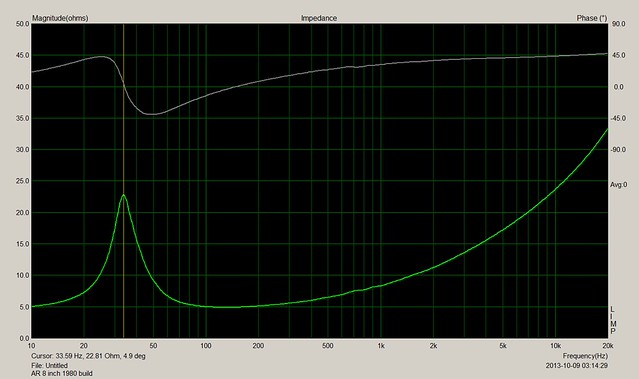
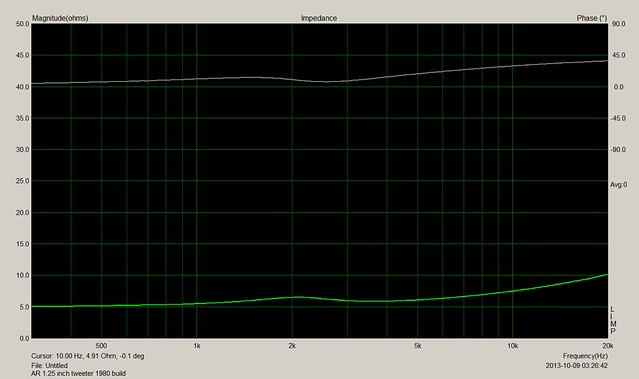
See you again next week for part 2, plus some measurements.
I also like the idea that all AR models are designed for close to wall use, and while this isn't always ideal in every way, it does lend a degree of consistency across the range.
The sometimes crude looking paper drivers perform very well and require the minimum of external filtering, and while that's not something I see as essential from an ideological perspective, it always feels 'right'
The late 60s and early 70s were the best days for AR and many of the designs improved on the early work.
There is often some confusion over the acoustic suspension (AS) principle and it's often mistakenly confused with Infinite Baffle (IB).
AS requires very low compliance in the woofer spider and surround, relying on the restoring force or air-spring effect of the air contained within a sealed box.
With IB you are still relying on the spider and surround providing the dominant restoring force. Suitable drivers for AS loading will typically have Fs (free air) resonance below 30hz and be capable of good excursion. Back when the original AR loudspeakers were introduced, drivers required huge cabinets for decent LF extension and the distortion performance was very poor due to nonlinearities introduced by the driver suspensions. Ed Villchur's idea was to eliminate the effect of such suspensions, reducing distortion and allowing reasonable bass extension from relatively small boxes, though these are still far larger than what's considered small today!
The 4xa is a rework of the earlier 4 and 4x with the main difference being the choice of tweeter. Each successive version shrank the paper cone/dome giving better top end extension and dispersion. Crossover frequency is quite low at 1.8khz but entirely sensible when crossing to an 8" woofer. Again, the correct engineering choice and the larger than usual tweeters have no problem crossing this low.
This particular pair of ARs were bought two years ago in a charity auction for £20 and have been sitting unloved since awaiting my attention. The bass drivers work but the coated cloth surrounds have detached from the woofer chassis in places and the tweeters didn't work. The cabinets were strong and intact. Quite scratched and with the usual corner dents. But hey, these are 40 years old.
Rather than repair these drivers I decided to use a newer set dating from 1979 which I'd culled from another similar AR model. These look and work perfectly following fresh foam on the woofers, and they share design very closely with the older drivers with the tweeter in particular being essentially the same thing but with a larger magnet assembly.
Here are the drivers:
IMG_0617
IMG_0615
Cabinets after sanding back to the bare veneer and baffles repainted:
(yes thats a lot of fibreglass in there - probably illegal today but it's great for a sealed box - makes you bloody itchy though!)
IMG_0602
IMG_0606
Next job will be fitting a new HF level control and wiring + the crossover cap.
Then some new grille cloth, brass badges and finally oiling the cabinets.
See you again next week for part 2, plus some measurements.