
MO!
MOnkey`ead!
- Joined
- Jun 19, 2003
- Messages
- 4,881
- Reaction score
- 1
British scientists have been given permission to perform therapeutic cloning using human embryos for the first time.
Thoughts?

British scientists have been given permission to perform therapeutic cloning using human embryos for the first time.

MO! said:Thoughts?
Shows how stupid/superstitious the Americans are


michaelab said:I'm all in favour of it. I do think its potential for curing all sorts of diseases in the relatively near future has been rather hyped up though and is possibly giving some people false expectations. I hear 10 years being bandied about but no one yet has the first clue how to do the re-programming of the cells to make them grow into what they want.
Michael.

OP-ED COLUMNIST
Building Better Bodies
By NICHOLAS D. KRISTOF
Published: August 25, 2004
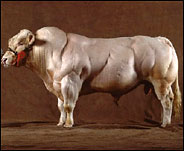
or a glimpse of what post-human athletes may look like beginning in the 2012 or 2016 Olympics, take a look at an obscure breed of cattle called the Belgian Blue.
Belgian Blues are unlike any cows you've ever seen. They have a genetic mutation that means they do not have effective myostatin, a substance that curbs muscle growth. A result is that Belgian Blues are all bulging muscles without a spot of fat, like bovine caricatures of Arnold Schwarzenegger.
These mutants may also point to the future of humans, particularly athletes. Gene therapies are being developed that would block myostatin in humans, and they offer immense promise in treating muscular dystrophy and the frailty that comes with aging. But once this gene therapy becomes available for people who really need it, it'll take about 10 minutes before athletes are surreptitiously using it, particularly because, in contrast to today's doping, gene therapy leaves no trace in the blood or urine.
The standard human shape would become different, and anyone with money could look like a body builder. As H. Lee Sweeney, chairman of physiology at the University of Pennsylvania School of Medicine, writes in a fascinating article in July's Scientific American, "The world may be about to watch one of its last Olympic Games without genetically enhanced athletes."
Even more important, gene therapy goes to the heart of an issue that will turn our species upside down in the coming decades. We are beginning to understand our own operating system - genes - and we're gaining the ability to try to "improve" our genetic endowment. If we do so, the ramifications could be as enormous as when our ancestors first crawled out of the slime to live on land.
Genetic tinkering gives me the willies. My concern is not so much the details of blocking myostatin, although Belgian Blue calves are so muscled that their mothers are at high risk of dying while giving birth, as with the possibility that we will irreversibly change what it is to be human. Geneticists have tried to improve apples over the last 50 years, producing larger, prettier species that just aren't as tasty or as interesting as they used to be; it would be a tragedy if we did to humans what we've done to apples.
Yet gene therapy also offers immense promise. Injecting genes to block myostatin could help not only those with muscular dystrophy but also anyone suffering the routine loss of musculature that comes with aging. Instead of breaking their hips and limping about on walkers, nonagenarians could run road races.
So far, the experiments have been very impressive. Dr. Sweeney and his team injected mice with genes that resulted in muscles 15 to 30 percent larger than in other mice. And when middle-aged mice were injected with the gene, their muscles did not weaken in old age.
Other gene therapies are being developed that would prod the human body to produce more red blood cells, a huge benefit to athletes. In monkeys and baboons, these therapies led the red blood cell count to just about double in 10 weeks.
A small number of humans have natural genetic mutations that are similar, and these people appear to live normally and to be exceptional athletes. For example, Eero Mantyranta of Finland was a three-time gold medalist in cross-country skiing Olympics in the 1960's, and his family later turned out to have a genetic mutation that produced extremely high levels of red blood cells.
Likewise, The New England Journal of Medicine in June documented a human version of the Belgian Blues, a boy with a genetic mutation that interferes with myostatin. From the moment he was born, he had extraordinary muscling, and at age 4 he can hold a 3-kilogram dumbbell in each hand with his arms extended. A European weight-lifting champion is said to have a similar mutation.
Perhaps the most important and complex decision in the history of our species is approaching: in what ways should we improve our genetic endowment? Yet we are neither focused on this question nor adequately schooled to resolve it.
So we desperately need greater scientific literacy, and it's past time for a post-Sputnik style revitalization of science education, especially genetics, to help us figure out if we want our descendants to belong to the same species as we do.
julian2002 said:wolfgang,
if it was ALL about brains stephen hawking would be doing the 100m sprint in 5 seconds. muscles are important too..............

