Backlash Brews Over Blue LEDs

Telkman

Nurturing Malevolence
Joined
Jun 19, 2003
Messages
628
Reaction score
0
Location
Hampshire
"Blue tends to cause more discomfort and disability glare than other, longer wavelengths," said Dr. David Sliney, an expert on the harmful effects of bright light sources at the U.S. Army Center for Health Promotion and Preventive Medicine in Maryland.

Sliney said the eye's lens cannot focus sharply on the blue lights. While red or green light is focused precisely onto the retina, blue light is focused slightly in front of it, which causes a distracting halo around bright blue lights.

In addition, blue scatters more widely than other colors as it passes through the eyeball, Sliney said. Together, these two effects cause the intense blue light from a point source, like an LED, to spread out across the retina, interfering with other parts of the scene. It's called dispersion: Blue's shorter wavelength makes it refract at a greater angle than, say, red or green."


Read On
 
Interesting... I've not had a problem with anything I own, but I have certainly seen a fair few items that are just too bright. The halo effect I had also noticed... particularly with the blue LED washer jets that boy racers seem to love.
 
I have a blue LED on my monitor, its very subtle and very nice, its not bright at all, just a nice dim blue LED to indicate the power is on.

However my DVD player also has a blue LED, its so bright that I cannot have it near the TV as its so distracting.
 
In any case, Dr. Shuji Nakamura is a happy man.

A landmark case: Patent lawsuit costs Japanese chemical company 20 billion yen


On January 30, the Tokyo High Court ordered Nichia Chemical, a leading manufacturer of fine chemicals in Japan, to pay 20 billion yen to a key inventor of various blue LED patents. This amount equals more than $186 million.

Shuji Nakamura, Professor of the University of California, invented the formula for a high-intensity blue light-emitting diode, and filed for a patent through Nichia Chemical in October 1990.

The Court decided that the total compensation from Nakamura's invention was 60.4 billion yen. Nakamura had initially claimed he should receive 20 billion yen from Nichia, where he was once employed. The Court realized that Nakamura should receive that amount of 20 billion yen, as the appropriate portion of the total remuneration for his invention.

In the verdict, the Court recognized that Nichia's exclusive right to the LED patent contributed to a substantial benefit for the company, and that Nakamura's invention played a crucial role in manufacturing the high-intensity blue LED.

The defendant, Nichia Chemical, filed an appeal against the verdict.

Nakamura, on the other hand, intends to further claim approximately 40 billion yen, the rest of the 60.4 billion yen remuneration for his invention that the Court determined.

Japan seems to be the only country, among all of the leading nations, where the number of lawsuits involving crucial inventors has been increasing, and the amount of remuneration (compensation for their inventions) they claim has also been increasing. This is said to be because of Japanese Patent Law Article 35, which says, ââ'¬Å"the employer must pay the employee a reasonable compensation separately from his or her salary,ââ'¬Â which does not clearly define what ââ'¬Å"a reasonable compensationââ'¬Â is.
 
I always wondered why blue leds had a halo effect arround them .................now I know
 
My LCD monitor has a blue LED and i never really notice it. It's not very bright, though. Apparently blue light is the worst for your eyes, since it has more energy and is close to ultra violet. Human eyes focus on green the best, red focuses slightly behind the retina.
 
i love blue led's as i'm red green colourblind which apparnently affects 1 in 4 men to some degree
blue led's are the best and look ice cool in fact many new cars use blue for the dash as it's easier to read at night
 
taz said:
in fact many new cars use blue for the dash as it's easier to read at night

Huh?
Sliney said the eye's lens cannot focus sharply on the blue lights. While red or green light is focused precisely onto the retina, blue light is focused slightly in front of it, which causes a distracting halo around bright blue lights.

I think that's why it is 'red' alert, as the eye is most sensitive to red light and so it needs less power in an emergency to light a place.
 
red lights are used to accustom people to the dark that's why submarines use it in a battle situation so that if all the lights go the men will not have re focus from one extreme to the other
as for blue dash lights in cars take a look for yourself I would imagine that all the car manufacturers doing it must have some reason other than pure looks!
 
Eye tests 'focus' on red and green text to establish whether eyes need short or long site correction. Strange they don't do a blue test, blue being a third of primary RGB colours.
 
Toyboy said:
Eye tests 'focus' on red and green text to establish whether eyes need short or long site correction. Strange they don't do a blue test, blue being a third of primary RGB colours.

It's because you cant focus on blue even if you have 20/20 vision.
 
We've recently bought a new Kettle. It glows blue when in use.

It tastes funny.
 
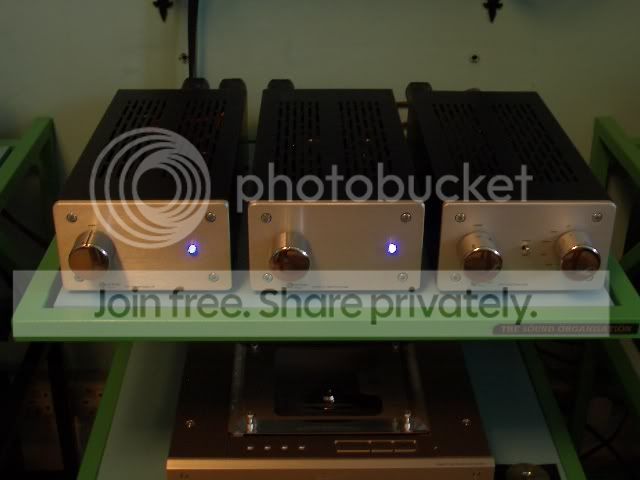
I recently replaced my blue leds for red ones:

Before.....

IMGP0835.jpg


...and after.....

IMGP0946.jpg


Sounds MUCH better!
 
seriously. this kettle makes the water taste funny.
 
We should all use nixie tubes. I have just ordered 50 of them to put in my amps in place of LED's.

They give more info as well.
 
don't tell me, soon there will be someone saying that these mains leads"i.e.c." if used on your kettle the coffe or tea will taste better (sic)..nando...... oops it does.
 
Back
Top