Class A or AB ?????

It seems to be fetching high prices as well! I remember a time when you couldn't give away a 10 year old Jap amp :D
I have a really old Pioneer receiver which is all valve, including the stereo decoder, and all point to point wired.It would cost a fortune to build it like that now.
 
Sliding bias has been with us for many years.

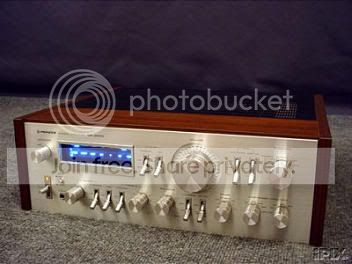
I recall as a youngster we had a Technics SUV6 using 'New Class A' and the lovely old Pioneer SA9800 amplifier I have here uses similar circuits, dating from 1979.
The Technics amps from that period had big yellow illuminated logos proudly proclaiming the technology - just in case you forgot :)

That 'New Class A' circuit is basically Dr Sandman's 'S-class. Which is a very close relative of Quad's CD approach, if not quite as elegant. Basically it uses a small class A stage, and a classB amp which drives the bulk of the load, with relative outputs scaled by a resistive sensing bridge. Like Quad's CD , you can look at the diagram and say '..of course!' only after the fact.

Anyway the elegance in proper error-correcting designs: they potentially approach ZERO output distortion, without requiring the (obviously impossible) infinite gain -before-feedback of a more conventional amp. That alone means good potential for tedious stability , reliability etc. Apart from Quad, Giovanni Stochino, Bob Cordell and others have published designs very much worth studying in this vein, easily found online.

...whereas Krells sliding bias thingy at best does 'that was a peak? oh, lets burn a few more watts until the next one, and hope it's enough... ;)
 
This is my baby - well its a bit big to be a baby :)

0400485781_001P.jpg


I had it shipped from the US about six years ago as it was mint and boxed. UK versions lacked the wooden case.
It had one of those infuriating faults that defies detection. It would just sit there after switch on doing nothing and suddenly splutter into life after about 20 minutes.
Eventually traced to a 3 pin reg buried inside the unit that look to be well soldered to the pcb but has a hairline break in the solder.
Great sounding thing.

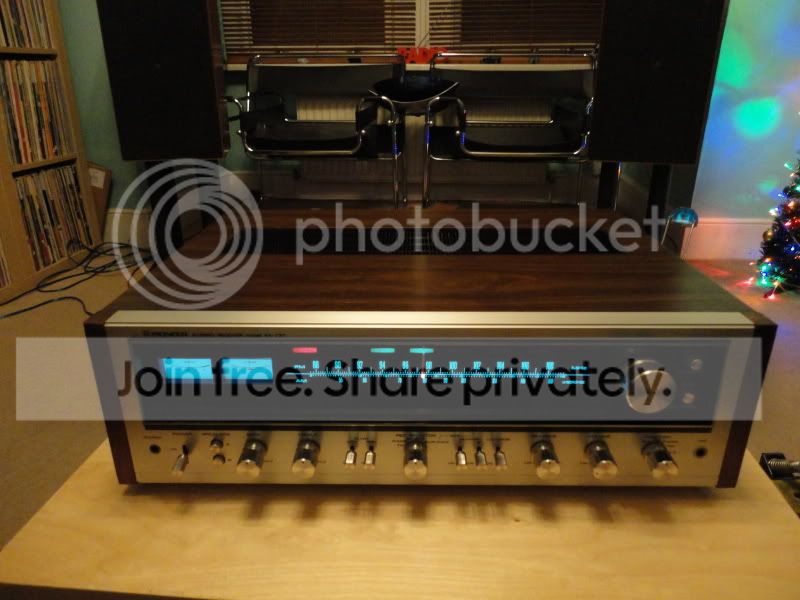
This is another recent buy.
Again in lovely condition and works a treat. This one needed a little work - a few caps and the filament lamps had blown but it came up fresh as a daisy and now correct at all test points - one channel had no bias current as found:

DSC00054.jpg


That 'New Class A' circuit is basically Dr Sandman's 'S-class. Which is a very close relative of Quad's CD approach, if not quite as elegant. Basically it uses a small class A stage, and a classB amp which drives the bulk of the load, with relative outputs scaled by a resistive sensing bridge. Like Quad's CD , you can look at the diagram and say '..of course!' only after the fact.

Anyway the elegance in proper error-correcting designs: they potentially approach ZERO output distortion, without requiring the (obviously impossible) infinite gain -before-feedback of a more conventional amp. That alone means good potential for tedious stability , reliability etc. Apart from Quad, Giovanni Stochino, Bob Cordell and others have published designs very much worth studying in this vein, easily found online.

...whereas Krells sliding bias thingy at best does 'that was a peak? oh, lets burn a few more watts until the next one, and hope it's enough... ;)

Thanks Martin wasn't aware of the link with CD.
Agree with your points. Feedback minimises distortion while error correction methods attempt to null.
 
Rob - I think it was *that* wooden crate I tripped over to ruin your ceramics collection ;) Apologies again ! Would love to hear these toys in action some day

regards
 
Rob - I think it was *that* wooden crate I tripped over to ruin your ceramics collection ;) Apologies again ! Would love to hear these toys in action some day

regards

LOL - it was a silly old pot - I was more worried about your head!

We'll fix up a visit at Bristol time.
Both are great with the 57s.
 
If there is any amplifier out there that can make a genuine 100W RMS per channel in true non cheating class A then I would be interested to see it! There must be one or two (not including home made water cooled jobbies that I have heard of) out there?!

Arkless,

You may wish to take a look at these both a genuine 100% class 'A' designs

Do not be fooled by the ratings, the SA-30 generates a TRUE 54Wrms into 8ohms and goes on to a very stable 290+Wrms @ 1 ohm

http://www.powermodules.com/power_modules/sa30_amp.html

The MB-01 is rated @ 85Wrms yet measures 124Wrms in 8 Ohms.
Interesting design

Neither of these amplifiers suffer the usual class 'A' issues of over rounded full some room distrubing bass or rolled off upper frequenices.

At the RMAF in 2009 one of the exhibibtors was using some of Nelsons big 600W mono's could not get the sound right in the room, he borrowed a pair of the MB-01's and ran them for the rest of the show some what surprised.

No special topology here, just good solid engineering refined over many years, both dual mono all the way through (two times custom wound 425VA for the SA-30 and two times 2Kva for the MB-01),uber solid power sources, full discrete isolated circutry with incredibly quiet multi regulated supplies, with LARGE heat sinks and high quality FET's.

These amplifers produce serious performance and will drive pretty much anything you hook them up too, but with a delicate, musical and involving sound.
Or the can rock your place too.

With a little time, understanding, patience and more than few hours R & D it's surprising what can be achieved.

Wm

A snapshot from a MAR testing session, sorry about the missing graps!

Unit Serial Number: Belles SA-30 power amplifier Unit Status: PASSED


TEST RESULTS


Check continuity... PASS


Output Level achieved (re. 1000Hz into 8ohm) =
0.22V (Peak = -13.16dBV or 219.7mVrms, Left Channel)
0.22V (Peak = -13.17dBV or 219.5mVrms, Right Channel)
Maximum gain PASS

Gain achieved (re. 1000Hz into 8ohm) =
20.82dB (Left Channel)
20.81dB (Right Channel)


Input Sensitivity for 0dBW PASS

UUT Input Sensitivity (re. 1000Hz into 8ohm) =
266mV (For 1.1W output, Left Channel)
265mV (For 1.1W output, Right Channel)


Input Sensitivity for Rated Output PASS

UUT Input Sensitivity (re. 1000Hz into 8ohm) =
1454mV (For 30.0W output, Left Channel)
1450mV (For 29.8W output, Right Channel)
2 Channel Power Output into 8ohm at 1kHz PASS


Output Level achieved into 8ohm re. 1000Hz =

54.3W @ 0.6% (Left Channel)
54.2W @ 0.5% (Right Channel)


2 Channel Power Output into 8ohm at 20Hz PASS


Output Level achieved into 8ohm re. 20Hz =

53.3W @ 0.5% (Left Channel)
53.1W @ 0.4% (Right Channel)
2 Channel Power Output into 4ohm at 1kHz PASS


Output Level achieved into 4ohm re. 1000Hz =

90.9W @ 0.1% (Left Channel)
97.8W @ 0.7% (Right Channel)
Continuous Power Output vs Distortion PASS


Continuous Output Profile into 8ohm re. 1000Hz =

1.6W @ 0.002% 1.7W @ 0.002% 1.9W @ 0.002% 2.1W @ 0.002%
2.2W @ 0.003% 2.4W @ 0.003% 2.7W @ 0.003% 2.9W @ 0.003%
3.2W @ 0.003% 3.6W @ 0.003% 3.9W @ 0.004% 4.3W @ 0.004%
4.8W @ 0.004% 5.3W @ 0.004% 5.8W @ 0.004% 6.4W @ 0.005%
7.1W @ 0.005% 7.8W @ 0.005% 8.6W @ 0.006% 9.5W @ 0.006%
10.5W @ 0.007% 11.6W @ 0.007% 12.7W @ 0.008% 14.0W @ 0.008%
15.5W @ 0.009% 17.1W @ 0.010% 18.8W @ 0.011% 20.7W @ 0.012%
22.9W @ 0.013% 25.2W @ 0.014% 27.8W @ 0.015% 30.6W @ 0.017%
36.0W @ 0.019% 39.7W @ 0.022% 43.8W @ 0.025% 48.3W @ 0.031%
53.0W @ 0.335% 53.4W @ 0.423% 53.9W @ 0.516% 54.3W @ 0.622%
54.7W @ 0.737% 54.7W @ 0.755% 54.8W @ 0.766% 54.9W @ 0.791%
55.0W @ 0.820% 55.1W @ 0.841% 55.1W @ 0.871% 55.2W @ 0.900%
55.3W @ 0.934% 55.4W @ 0.956% 55.4W @ 0.978% 55.5W @ 1.003%


(Left Channel)


1.6W @ 0.002% 1.7W @ 0.002% 1.9W @ 0.002% 2.1W @ 0.002%
2.2W @ 0.002% 2.4W @ 0.002% 2.6W @ 0.003% 2.9W @ 0.003%
3.2W @ 0.003% 3.5W @ 0.003% 3.9W @ 0.003% 4.3W @ 0.003%
4.7W @ 0.003% 5.2W @ 0.004% 5.8W @ 0.004% 6.4W @ 0.004%
7.0W @ 0.004% 7.7W @ 0.004% 8.5W @ 0.005% 9.4W @ 0.005%
10.4W @ 0.006% 11.4W @ 0.006% 12.6W @ 0.007% 13.9W @ 0.007%
15.3W @ 0.008% 16.9W @ 0.008% 18.6W @ 0.009% 20.5W @ 0.010%
22.6W @ 0.011% 25.0W @ 0.012% 27.5W @ 0.013% 30.3W @ 0.014%
35.8W @ 0.016% 39.5W @ 0.018% 43.5W @ 0.021% 48.0W @ 0.026%
52.7W @ 0.228% 53.2W @ 0.271% 53.6W @ 0.349% 54.0W @ 0.438%
54.4W @ 0.538% 54.8W @ 0.720% 54.9W @ 0.752% 55.0W @ 0.779%
55.1W @ 0.801% 55.2W @ 0.835% 55.2W @ 0.866% 55.3W @ 0.894%
55.4W @ 0.913% 55.5W @ 0.937% 55.6W @ 0.955% 55.6W @ -Inf%


(Right Channel)
Dynamic Power Output vs Distortion into 8ohm PASS


Dynamic Output Profile into 8ohm re. 1000Hz =

4.9W @ 0.004% 5.4W @ 0.004% 6.0W @ 0.004% 6.6W @ 0.005%
7.3W @ 0.005% 8.0W @ 0.006% 8.8W @ 0.007% 9.7W @ 0.007%
10.7W @ 0.008% 11.8W @ 0.008% 13.1W @ 0.008% 14.4W @ 0.008%
15.9W @ 0.008% 17.5W @ 0.008% 19.3W @ 0.008% 21.3W @ 0.009%
23.5W @ 0.010% 25.9W @ 0.012% 28.5W @ 0.015% 31.4W @ 0.020%
37.0W @ 0.028% 40.8W @ 0.041% 44.9W @ 0.062% 49.5W @ 0.096%
54.2W @ 0.149% 54.6W @ 0.230% 55.1W @ 0.345% 55.5W @ 0.495%
55.5W @ 0.670% 55.6W @ 0.847% 55.7W @ 0.990% 55.8W @ 1.070%
55.9W @ 1.075% 56.0W @ 1.022% 56.0W @ 0.946% 56.0W @ 0.889%
56.2W @ 0.900% 56.2W @ 1.063%


Dynamic Power Output vs Distortion into 4ohm PASS


Dynamic Output Profile into 4ohm re. 1000Hz =

5.0W @ 0.003% 5.5W @ 0.003% 6.1W @ 0.003% 6.7W @ 0.003%
7.4W @ 0.003% 8.1W @ 0.004% 9.0W @ 0.004% 9.9W @ 0.004%
10.9W @ 0.005% 12.0W @ 0.005% 13.3W @ 0.006% 14.6W @ 0.006%
16.1W @ 0.006% 17.8W @ 0.006% 19.6W @ 0.006% 21.6W @ 0.006%
23.8W @ 0.006% 26.3W @ 0.007% 29.0W @ 0.007% 31.9W @ 0.008%
35.2W @ 0.008% 38.8W @ 0.010% 42.8W @ 0.011% 47.2W @ 0.014%
52.0W @ 0.017% 57.3W @ 0.022% 63.2W @ 0.030% 74.3W @ 0.041%
81.9W @ 0.057% 90.3W @ 0.082% 99.2W @ 0.117% 100.0W @ 0.168%
100.8W @ 0.239% 101.6W @ 0.335% 102.3W @ 0.458% 103.1W @ 0.608%
103.1W @ 0.602% 103.4W @ 0.944% 103.5W @ 1.090% 103.5W @ 1.191%
103.6W @ 1.228% 103.8W @ 1.194% 104.0W @ 1.101% 104.2W @ 0.968%
104.2W @ 0.981%


Dynamic Power Output vs Distortion into 2ohm PASS


Dynamic Output Profile into 2ohm re. 1000Hz =

5.3W @ 0.002% 6.4W @ 0.002% 7.8W @ 0.002% 8.8W @ 0.003%
10.7W @ 0.003% 12.9W @ 0.004% 15.6W @ 0.004% 18.9W @ 0.005%
22.9W @ 0.006% 27.7W @ 0.007% 33.5W @ 0.008% 40.6W @ 0.009%
49.1W @ 0.010% 59.4W @ 0.011% 71.9W @ 0.013% 86.9W @ 0.015%
105.2W @ 0.018% 135.7W @ 0.023% 164.2W @ 0.036% 190.7W @ 1.933%


Dynamic Power Output vs Distortion into 1ohm PASS


Dynamic Output Profile into 1ohm re. 1000Hz =

5.3W @ 0.004% 6.4W @ 0.005% 7.8W @ 0.006% 9.4W @ 0.008%
11.4W @ 0.009% 13.8W @ 0.011% 16.7W @ 0.012% 18.9W @ 0.012%
22.9W @ 0.012% 27.7W @ 0.011% 33.5W @ 0.011% 40.5W @ 0.011%
49.0W @ 0.010% 59.4W @ 0.010% 71.9W @ 0.010% 87.0W @ 0.011%
105.2W @ 0.012% 127.4W @ 0.013% 154.1W @ 0.015% 186.4W @ 0.019%
225.6W @ 0.028% 286.8W @ 0.787% 290.6W @ 1.074%

 
Last edited by a moderator:
Felix. I very nearly posted the same as you about sandman's class s circuitry but something in my head made me double check my first thoughts on the subject and indeed it is the "class AA" which is similar to Aubrey sandman's work.. I believe he unsuccessfully tried to sue Matshushita over it. i don't think it is any less elegant than the CD idea... but i really know what you mean about the "ah yesI wish I had thought of that " bit but only after you had seen how it works!

wadia-miester. I would not at all agree about class a amps having excess bass or rolled off treble. They are the closest to perfect that we have.
The key to class A with even reasonable power outputs is fan cooling using large fans at low speeds to keep them quite. i have some amps I built that are based on the Linsley Hood design that are cooled in this way and give 25WRMS per channel and stay at 50C. if it wasn't for the fans the heatsinks would be truly humungous! That's how Krell managed 50W from the KSA50.
 
wadia-miester. I would not at all agree about class a amps having excess bass or rolled off treble. They are the closest to perfect that we have.
The key to class A with even reasonable power outputs is fan cooling using large fans at low speeds to keep them quite. i have some amps I built that are based on the Linsley Hood design that are cooled in this way and give 25WRMS per channel and stay at 50C. if it wasn't for the fans the heatsinks would be truly humungous! That's how Krell managed 50W from the KSA50.

Thank you for the reply Artless (welcome to the forum btw)

Being fair I would say tarring all class 'A' amplifiers with the statement I used in my previous post was unjust, there are some very capable designs out there that do sound very good without question, though not many I have heard to date.

Interesting method of heat dispersal there, I have not seen that kind of implementation on my travels. However if it works then fair play !

I maybe shot at down for this, however I never really rated any of the older Krell designs, I have KSA 50' and 80 here, they do little for me personally except in replacing caps and FETs every so often on amps in for repair. (Old age and people touching the speaker cables together!)
However they do have a following.

The size of SA-30 is no bigger than say a Gamut D200 or Bryston 4BBST, it runs pretty close to 50C, some of the newer thermo-alloys have far superior heat dispassionate index than those used 25-30 years ago, granted they still need to be large surface area.

Over the last 12 months or so we have performed a few comparisons with the newer MF AMS50W unit, which is around 2.5 times the size and generates far more heat into the room. It is an unfair comparison on the ams.

On this point I suspect a good few people will throw their toys in the air, I feel class A is not the pinnacle in amplifier design by a long shot :eek::eek::eek:

A thoroughly thought out high quality switching amplifier, with a superb linear supply, with dedicated (quasi / super) regulated multiple supplies, ultra clean analogue and digital ground planes, and a higher enough switching frequency (between 1.3 and 1.6Mkz) and a decent enough band width at least the six harmonic can produce spectacular results.

Has the texture, depth, presence and staging of a class 'a', articulation, rhythmic poise and timing of a top notch class 'a/b' coupled with the superb dynamic transients, total top to bottom linearity and musicality of 2A3.
They also can produce those sweet nuances, deep imaging, big spatial cues and yet deliver the delicate interplay between musicians as well.
Certainly not perfect, however a correctly implemented design can reap big rewards.

Again there are some decent designs coming through now, more on the way with the power consumption issues that the EU will be imposing soon.

Anyway, good to see an interesting debate with a respected poster who genuinely knows his onions contributing too, Felix.


Wm (Tony)
 
Switching amps can be good but personally I believe they have some way to go yet.
And that's Arkless, not Artless.. Mr Arkless to you :p
 
Tony I'd love to hear such a switching amp, all the ones i've heard so far have been, well, crap.

Hypex, Nuforce, B&O, Rotel, Bel Canto, Channel Islands, all of them have had a signature about the treble that I find 'disconcerting'.
 
Neither of these amplifiers suffer the usual class 'A' issues of over rounded full some room distrubing bass or rolled off upper frequenices.

No reason at all why the class of an amplifier should be inherently responsible for that type of sound.
Other aspects of the design will be responsible.
 
Felix. I very nearly posted the same as you about sandman's class s circuitry but something in my head made me double check my first thoughts on the subject and indeed it is the "class AA" which is similar to Aubrey sandman's work.. I believe he unsuccessfully tried to sue Matshushita over it. i don't think it is any less elegant than the CD idea... but i really know what you mean about the "ah yesI wish I had thought of that " bit but only after you had seen how it works!

Technics had New Class A at first and then Class AA came later IIRC.
I thought the original was a sliding bias system similar to that used by Pioneer.

The Pioineer SA9800 service manual goes into great detail about how their system works, both the power amp topology and the rest of the amp. They seemed to throw everything at it!
Ring Emitter transistors for the power amplifier - not come across those in an amplifier before.
 
"Technics had New Class A at first and then Class AA came later IIRC.
I thought the original was a sliding bias system similar to that used by Pioneer."

Yep that's about as I understand both points.

"The Pioineer SA9800 service manual goes into great detail about how their system works, both the power amp topology and the rest of the amp. They seemed to throw everything at it!
Ring Emitter transistors for the power amplifier - not come across those in an amplifier before."

it makes interesting reading to compare the design (or lack of) of likes of the A+R A60 and sugden A48 that were being recommended in preference to the Pioneer and it's ilk at the time!!
 
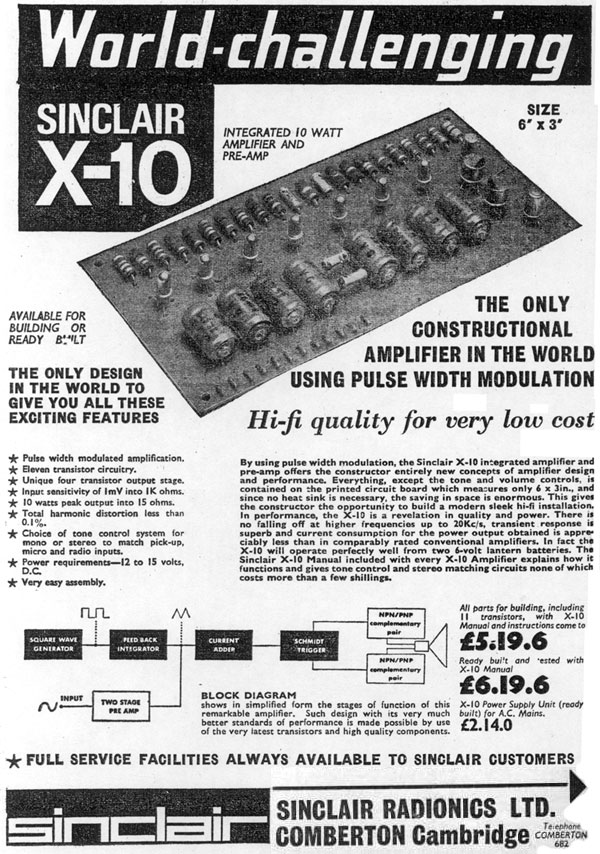
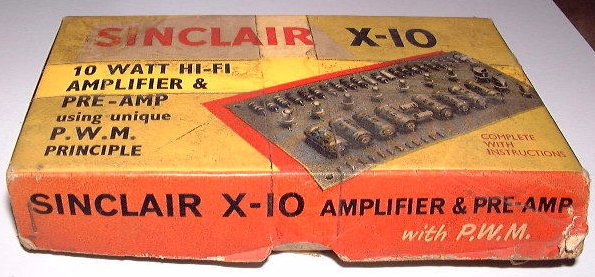
where does it become a pure class D ? IN THE EARLY 70,S i used to buy their amp kits, very good vfm they were.
 
Basically it uses a small class A stage, and a classB amp which drives the bulk of the load, with relative outputs scaled by a resistive sensing bridge. [/i] ;)

Wasn't there an amp topology that ran multiple voltage rails, with class A/B running on the low rails and class B on the higher ones, and then switching to the higher rails when power demands increased? It sounds quite similar.
 
Back
Top