Effects of metal enclosures on circuits

Cor it's been almost so long that I'd completely forgotten what this thread was actually about.

Anyway, back on topic.

I know some designers make claims about not using metal in their cases and how metals are the root of all evil, and that gear sounds much better without it, due to eddy currents, reflection of RFI/EMI or whatever is currently flavour of the day.

I know DNM go so far as to eradicate metal from their cases that they use plastic screws in their assembly and they actually contain no metal other than the components themselves and the PCB tracks, no heatsinks, remotely cased power supplies, lots of steps to create a holistic approach to eradicating metal from their designs.

I can't help but get the feeling that some other brands might not have such joined up thinking, thinking perhaps no one will notice a huge metal heatsink in their amps. Because of course a heatsink doesn't have the same detrimental effect as an alloy box, especially if they glue them shut so no one can see.

Maybe they just glue them shut becuase they are ashamed of the DIY build quality- who knows, certainly i'd not 'glue' down the transformers in my power supplies- you decide.
 

Attachments

  • NVA 80 amplifier.jpg
    NVA 80 amplifier.jpg
    99.5 KB · Views: 400
Cor it's been almost so long that I'd completely forgotten what this thread was actually about.

Anyway, back on topic.

I know some designers make claims about not using metal in their cases and how metals are the root of all evil, and that gear sounds much better without it, due to eddy currents, reflection of RFI/EMI or whatever is currently flavour of the day.

I know DNM go so far as to eradicate metal from their cases that they use plastic screws in their assembly and they actually contain no metal other than the components themselves and the PCB tracks, no heatsinks, remotely cased power supplies, lots of steps to create a holistic approach to eradicating metal from their designs.

I can't help but get the feeling that some other brands might not have such joined up thinking, thinking perhaps no one will notice a huge metal heatsink in their amps. Because of course a heatsink doesn't have the same detrimental effect as an alloy box, especially if they glue them shut so no one can see.

Maybe they just glue them shut becuase they are ashamed of the DIY build quality- who knows, certainly i'd not 'glue' down the transformers in my power supplies- you decide.
You misunderstand per usual, so it has to be deliberate, as once again you wish to create conflict. It has been explained many times and is in the archives at so many different forums I would have thought you would know it by heart by now.

But for some reason you seem to think shows it up in a bad light, to my mind shows it up in the best light. That construction is far superior for many reasons explained many times, but that is only my opinion, plus it was a pic of a stage of build and hadn't even been finished because the customer wanted to see it. Now show us a picture of the inside of the amp you designed.

Flatty tried this ploy with this picture a few weeks ago with the inside pic of a Naim beside it and I replied perfectly well then, so just look it up.

EDIT - actually on second thoughts it is finished as far as working, it is just missing some by-passes.
 
SQ - that is a nasty way to make an interesting point, which ruins what should be an interesting discussion...

To go so far as to suggest NVA cover up their internals to conceal something (..."Maybe they just glue them shut becuase they are ashamed of the DIY build quality- who knows"..) when other manufacturers don't get accused of concealment is plain nasty - mud sticks, everyone knows that. Your post is worthy of AVI's worst over the last year or two.

BTW, have you considered the heatsink may be ally, and the detrimental effects of metallic cabinets are what is addressed in the thread title: 'Effects of metal enclosures on circuits', not simply metal components. I'm afraid Richard is right about you.
 
Apologies Richard, I didn't intend to double up on image posting. I didn't catch it last time round, I guess Andrew's post was deleted?

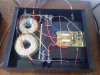
Could you explain how directly coupling two transformers to the acrylic case, is better than having them on separate compliant mounts? or why gluing capacitors to the same casework should enhance how they work, maybe it reduces micro-phonic pickup?

Alan, I fail to see the difference between an alloy sleeve, Naim style and a huge alloy plate NVA style. Either alloy has an effect or it doesn't. I don't seem to remember the thread only being about steel cases, and last time I checked aluminium was indeed a metal- in fact the earth's most abundant metal. perhaps you have the same trouble with materials nomenclature that Richard suffers from.
 
Apologies Richard, I didn't intend to double up on image posting. I didn't catch it last time round, I guess Andrew's post was deleted?

Could you explain how directly coupling two transformers to the acrylic case, is better than having them on separate compliant mounts? or why gluing capacitors to the same casework should enhance how they work, maybe it reduces micro-phonic pickup?

Alan, I fail to see the difference between an alloy sleeve, Naim style and a huge alloy plate NVA style. Either alloy has an effect or it doesn't. I don't seem to remember the thread only being about steel cases, and last time I checked aluminium was indeed a metal- in fact the earth's most abundant metal. perhaps you have the same trouble with materials nomenclature that Richard suffers from.
Nope, you get nothing from me!

EDIT - this thread has been edited because I was naughty and insulted the man, but he gets nothing from me because he *is* what I called him, but I fully understand why the mods removed it, even if it was a valid description.
 
Last edited by a moderator:
Alan, I fail to see the difference between an alloy sleeve, Naim style and a huge alloy plate NVA style. Either alloy has an effect or it doesn't. I don't seem to remember the thread only being about steel cases, and last time I checked aluminium was indeed a metal- in fact the earth's most abundant metal. perhaps you have the same trouble with materials nomenclature that Richard suffers from.

You surely aren't inviting me to patronise you by explaining Faraday cages to you as opposed to an alloy plate under a circuit, so I assume you are being deliberately obtuse. The thread is 'Effects of Metal Enclosures on Circuits', so the distinction is relevant. The second part of your post deserves no response.
 
Alan I'd more than welcome a discussion of the effects of metal cases, this is what the thread is meant to be about after all. All we've had so far is richard making unsubstantiated statements of opinion and calling me an arsehole.

So far we've had 12 pages of nothing related to topic based on any fact. Richard seems unwilling to now discuss his enclosures, so I guess I'll have to settle for the monkey if the organ grinder is no longer playing.
 
Alan I'd more than welcome a discussion of the effects of metal cases, this is what the thread is meant to be about after all. All we've had so far is richard making unsubstantiated statements of opinion and calling me an arsehole.

So far we've had 12 pages of nothing related to topic based on any fact. Richard seems unwilling to now discuss his enclosures, so I guess I'll have to settle for the monkey if the organ grinder is no longer playing.
You will never (in your terms) get anything but unsubstantiated claims from me because I have no need to substantiate them to you. They are subjective decisions and came from listening tests, which you are fully welcome to repeat, and they are explained in lots of places including the interview on my archive website.

Best of luck, could be a couple of years work if you concentrate on it.
 
All we've had so far is richard making unsubstantiated statements of opinion and calling me an arsehole.

Well that one seems pretty well substantiated, I'd say.

I go back to my opening comment - you raised a good point then ruined a rather interesting discussion with your nasty insinuation and agenda. I have no expertise with which to engage the subject at hand.
 
I have been sitting here reading 18 pages on what was supposed to be the best
matrixes metal or Plastic .Why would you not go to your own British Products
Tom Evans is a mile in front of all your Chinese and most others.His Lithos Regulation
is unsurpassed his Groove Preamplifiers are there any better made in a perspex case.And if you wanted the best Line stages you have them made in your own backyard. What more could you want just beautiful music Home Made.Noel W.
 
Have you measured his lithos regs, do you know for sure they are better than say a Jung reg, a Teddyreg or any of the other huge number of variants available from the likes of Paul Hynes et al.

I'm sure they sound great, but 'unsurpassed' is a bold claim.
 
Hello sq225917 Yes you are right i have not heard the huge number of Regulation that
is available to-day .I use the Lithos in my Groove X and i must admit that i am may i use the word ROY influenced by his knowledge and being the top British Reviewer who has a vast amount of the top High End Equiptment at his call well what more can i say
OH-Yes Perspex is the best of all materials polmethyl-methacrylate for case work on
certain audio cases. Love to hear from you but could you change the colour of your
Speakers Sincerey Noel W.
 

Latest posts

Back
Top