
You are using an out of date browser. It may not display this or other websites correctly.
You should upgrade or use an alternative browser.
You should upgrade or use an alternative browser.
Effects of metal enclosures on circuits
- Thread starter RobHolt
- Start date

- Joined
- Jul 5, 2006
- Messages
- 1,198
- Reaction score
- 0
It is obviously more easily damaged than any metal, remember it is like a glass (originally called Plexiglass) so the problem is shatter. That is why structually I use 10mm load points on small cases and 20mm on large cases and the Statement plates. Your lid was probably 3mm which is fairly easy to damage. But permanently gluing it is a fascinating process, you just use a solvent and the two part actually partially melt and become one and the joint is the same strength as any other part of the structure if not stronger on a corner.It would be an interesting and different aesthetic.
Brian cherry at diyhifisupply (a brand I like) has started manufacturing valve amps in bamboo.
I must dig up his explanation around this unusual choice of case. It may be similar to your own reasons for moving away from metal.
How do you find acrylic strength? I had a gyrodec years ago and I cracked the lid. Is it the same sort of stuff?

bottleneck
talks a load of rubbish
Ive had a look, it appears its just bamboo sides, rather like border patrol using wood on the sides.
http://www.diyhifisupply.com/catalog/24
http://www.borderpatrol.net/amplifiers.htm
http://www.diyhifisupply.com/catalog/24
http://www.borderpatrol.net/amplifiers.htm
- Joined
- Jul 5, 2006
- Messages
- 1,198
- Reaction score
- 0
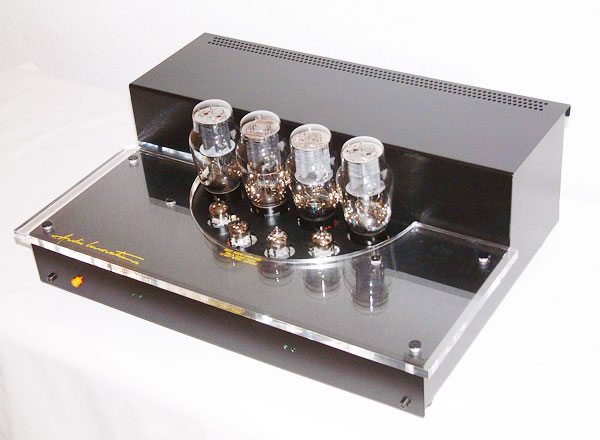
I think that was just decoration as there was a metal plate below it, so it wasn't structural.IIRC Audio Innovations used acrylic for the top plate of their well known valve amps such as the 500 integrated.
bottleneck
talks a load of rubbish
IIRC Audio Innovations used acrylic for the top plate of their well known valve amps such as the 500 integrated.
Thats right, gosh it takes me back.
The way the valves reflected on that top (which I presume is acrylic?) was really a visual masterpiece at the time.
- Joined
- Jul 5, 2006
- Messages
- 1,198
- Reaction score
- 0
Yes that is acrylic, but believe it or not a black plate would reflect even more and look even more attractive.Thats right, gosh it takes me back.
The way the valves reflected on that top (which I presume is acrylic?) was really a visual masterpiece at the time.
I always thought that range to be a bit amateurish with quite a few sharp edges on the metal plate. But as long as you didn't look too closely at the construction it did the job visually.
bottleneck
talks a load of rubbish
yes, now I look at it - its pressed steel chasis is cheap by modern standards. These days though casework is much better.
Judging by its period in time though, that acrylic top really made the valve glow reflect nicely. I agree it would have looked even better in black.
Judging by its period in time though, that acrylic top really made the valve glow reflect nicely. I agree it would have looked even better in black.

sq225917
Exposer of Foo
- Joined
- Jan 11, 2007
- Messages
- 1,514
- Reaction score
- 0
It is obviously more easily damaged than any metal, remember it is like a glass (originally called Plexiglass) so the problem is shatter.
The material trademark name is Plexiglas (SIC) with a single S at the end. It was originally made by Rohm and Haas as a shatterproof replacement for glass used in fighter planes. Oh and it's stiffer and more scratch resistant than quite a few metals, not least sodium and potassium.
So back to Bottlenecks post.
Now hole cutting is a problem and specialised bits are required for acrylic of that thickness or you will constantly be jamming the drill. The supplier is fully CNC equiped so any arangements of holes or slots are cut easily.
It can be easily drilled with standard hss twist drills; the problem is the drill requires a blunt cutting edge, a quick drill of a soft red brick will do wonders. Larger holes can be drilled with quality hole saws and most 2 flute router cutters produce excellent results. It can be cut with a hand wood saw providing its not very cold &
hacksaws or jig saws manage fine.
[/QUOTE]
It is obviously more easily damaged than any metal, remember it is like a glass (originally called Plexiglass) so the problem is shatter. That is why structually I use 10mm load points on small cases and 20mm on large cases and the Statement plates. Your lid was probably 3mm which is fairly easy to damage. But permanently gluing it is a fascinating process, you just use a solvent and the two part actually partially melt and become one and the joint is the same strength as any other part of the structure if not stronger on a corner.[/QUOTE]
Stainless steel scratches more easily than the acrylic you use in your products.
The only similarity to glass is it's available as transparent sheet. Try dropping a 6 foot square of 6mm plate glass and a 6mm sheet of Perspex on to your head, use the Perspex first.
Watching a butterfly emerge from a chrysalis is a great deal more fascinating.
Many shaterproof acrylics are produced, 'Lexan' is used in Bus shelters or any other location that you want vandle proof glazing, the only problem with them is that they are more easily scratched, although scratch resistant sheets are available.
- Joined
- Jul 2, 2008
- Messages
- 78
- Reaction score
- 0
On the scratching thing - I've had quite an amount of Acrylic cased gear & have never managed to scratch it or even see such gear with a scratch - however, the finish is a little fragile. The sort of scratching you do get is a fine grazing usually from dusting/cleaning, and it's usually only noticeable with the light just right (or wrong) on it.
I am so lame I actually bought a yellow feather duster (has to be yellow..) for us only on the hifi (so it stays clean). There, I can't believe I said it, it is like admitting I have a problem!
 Anyway, I am almost better now, I hardly use the duster.
I am so lame I actually bought a yellow feather duster (has to be yellow..) for us only on the hifi (so it stays clean). There, I can't believe I said it, it is like admitting I have a problem!
Anyway, I am almost better now, I hardly use the duster.
- Joined
- Jul 5, 2006
- Messages
- 1,198
- Reaction score
- 0
Can we have a photo of you and the yellow feather duster, preferably when you have your pinny onOn the scratching thing - I've had quite an amount of Acrylic cased gear & have never managed to scratch it or even see such gear with a scratch - however, the finish is a little fragile. The sort of scratching you do get is a fine grazing usually from dusting/cleaning, and it's usually only noticeable with the light just right (or wrong) on it.
I am so lame I actually bought a yellow feather duster (has to be yellow..) for us only on the hifi (so it stays clean). There, I can't believe I said it, it is like admitting I have a problem!

- Joined
- Apr 12, 2009
- Messages
- 125
- Reaction score
- 0
Tom Evans of Audio Design uses Perspex an optically clear Thermo Plastic Resin
Polymethyl Methacaylate. I have his Groove Phono Amp he explains his reason for
using Perspex and not metal. The perspex is black in colour very attractive Non Magnetic. Noel W.
Polymethyl Methacaylate. I have his Groove Phono Amp he explains his reason for
using Perspex and not metal. The perspex is black in colour very attractive Non Magnetic. Noel W.

I
He had two V shaped highly polished runners and rolled a small cylindrical magnet down each in turn.
So he demonstrated an eddy current brake. Because Al is a conductor, not because of any secret ferromagnetic properties.

RobHolt
Moderator
- Joined
- Oct 23, 2004
- Messages
- 4,126
- Reaction score
- 12
So he demonstrated an eddy current brake. Because Al is a conductor, not because of any secret ferromagnetic properties.
But isn't that the point?
Avoidance of eddy currents around circuitry.
- Joined
- Sep 28, 2009
- Messages
- 35
- Reaction score
- 0
Thats right, gosh it takes me back.
The way the valves reflected on that top (which I presume is acrylic?) was really a visual masterpiece at the time.
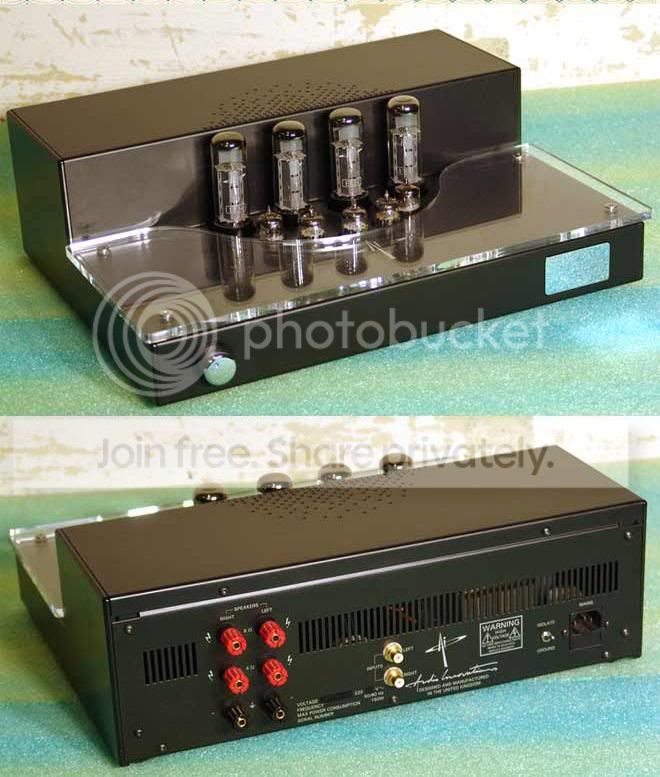
To be fair, that case design was later re-visited by the original designer Graham Allen and became the sleeker looking & much more attractive 800 anniversary model.
But isn't that the point?
Avoidance of eddy currents around circuitry.
Eddy currents are induced by moving magnetic fields. Eddy currents induced into cases are self cancelling because they short-circuit themselves and disappear instantaneously as as very small heat is generated by the work done in dissipation.
Electric fields generate magnetic fields, and to stop these forming in the first place is accomplished by relevant circuit design. Modern informed circuit design generates only exceedingly small electric and magnetic fields. It's very easy to keep emissions low by the use of resonant filters (acceptance or rejection) distributed throughout the circuit. These components have no effect on audio signals.
The metal cabinets are in my opinion very necessary to keep stray environmental magnetic and electric fields from getting into the circuits inside the case. That is why new regulations have been implemented to control this, and also the reason why we use screened cables.
One of the biggest offenders in this respect is devices which carry ethernet signals along mains wiring. They will absolutely destroy the reception of a sensitive short-wave receiver for example.
JC.
JC.
Last edited by a moderator:

so much confusion exists regarding the output rating of power amps in relation to their efficiency, that it is felt that some notes on the subject will prove a value,
owing to the lack of standardisation , it is quite possible that the output of a particular amp could be stated as 10 watts, 15 watts, or even 50 watts, the first figure of 10 watts is taken at less than 5% harmonic distortion (usually known as undistorted output ) the second is maximum speech output , and the third anode dissipation,
nando.
owing to the lack of standardisation , it is quite possible that the output of a particular amp could be stated as 10 watts, 15 watts, or even 50 watts, the first figure of 10 watts is taken at less than 5% harmonic distortion (usually known as undistorted output ) the second is maximum speech output , and the third anode dissipation,
nando.
Modern EMC legislation is to keep emissions in primarily, and keeping any stray emissions out is almost a bolt on to the legislation for those circumstances when stuff like mains born ethernet is used (essentially breaking all the rules). However smart circuit design can be employed to do 90% of this task, and the brute force method of cladding stuff in an earthed metal jacket should only need to be done on older designs and by those who are not clever enough to do it the smart way or who purposely go for circuit purity and clad their designs in metal to compensate. There is nothing great or new about smart design and its ability to dispense with the need to sheild. Something as old and well used as balanced circuit topography does a fine job of achieving the desired aim. If you do have a severe issue with EM polution your best bet would be to fix that problem, not simply sheild so you can ignore it!Eddy currents are induced by moving magnetic fields. Eddy currents induced into cases are self cancelling because they short-circuit themselves and disappear instantaneously as as very small heat is generated by the work done in dissipation.
Electric fields generate magnetic fields, and to stop these forming in the first place is accomplished by relevant circuit design. Modern informed circuit design generates only exceedingly small electric and magnetic fields. It's very easy to keep emissions low by the use of resonant filters (acceptance or rejection) distributed throughout the circuit. These components have no effect on audio signals.
The metal cabinets are in my opinion very necessary to keep stray environmental magnetic and electric fields from getting into the circuits inside the case. That is why new regulations have been implemented to control this, and also the reason why we use screened cables.
One of the biggest offenders in this respect is devices which carry ethernet signals along mains wiring. They will absolutely destroy the reception of a sensitive short-wave receiver for example.
JC.
JC.

Cable Monkey, I think you may not appreciate how bad the problem is.
Radio communications are severely affected by noise generated from modern domestic and consumer equipment coming from every household on housing developments.
You only have to compare the same sensitive equipment operated in a rural environment to realise it.
The only answer is to shield it as much as possible or tell all the neighbours to get rid of their stuff from Argos, Comet, and PC World.
JC.
Radio communications are severely affected by noise generated from modern domestic and consumer equipment coming from every household on housing developments.
You only have to compare the same sensitive equipment operated in a rural environment to realise it.
The only answer is to shield it as much as possible or tell all the neighbours to get rid of their stuff from Argos, Comet, and PC World.
JC.
RobHolt
Moderator
- Joined
- Oct 23, 2004
- Messages
- 4,126
- Reaction score
- 12
To be fair, that case design was later re-visited by the original designer Graham Allen and became the sleeker looking & much more attractive 800 anniversary model.
Guy, it any of the internal design carried over into the Puresound kiy?